

In the high-stakes environment of aviation maintenance, technical expertise is indispensable, but it is effective communication—anchored by soft skills—that ensures safety, efficiency, and a collaborative culture. On the hangar floor, misunderstandings can have immediate and severe consequences, making the mastery of soft skills a professional imperative for every Aircraft Electronics Technician (AET), avionics technician, or A&P-certified mechanic. This essay explores why soft skills are vital in aviation maintenance, how they impact daily operations, and why industry leaders increasingly prioritize communication alongside technical training.
Literature Review: The Role of Soft Skills in Aviation Maintenance
Aviation maintenance literature consistently identifies communication failures as root causes of incidents and near-misses. Soft skills such as active listening, conflict resolution, and clear documentation bridge the gap between individual expertise and team success. For example, recent studies highlight that technicians who complete AET certification training programs or avionics technician training are not only assessed for their technical proficiency but also for their ability to communicate safety-critical information under pressure. The National Center for Aerospace & Transportation Technologies (NCATT) and the Federal Aviation Administration (FAA) both advocate for the integration of soft skills into certification and continuing education programs. As the complexity of modern aircraft systems grows, effective interpersonal communication becomes the linchpin for safe and efficient operations, especially when translating complex diagnostics into actionable steps on the floor.
Yet, a prevailing challenge in aviation maintenance remains: technical expertise is often presumed to guarantee effective communication, but evidence reveals a persistent skills gap. Maintenance teams—diverse in experience, training, and sometimes language—rely on precise, unambiguous exchanges to synchronize efforts. Even seasoned technicians with an FAA Airframe & Powerplant (A&P) certification must continuously hone their soft skills to adapt to evolving team dynamics and technological shifts. Without this, the risk of costly errors multiplies.
Analysis: Soft Skills in Action on the Hangar Floor
Team Coordination and Safety
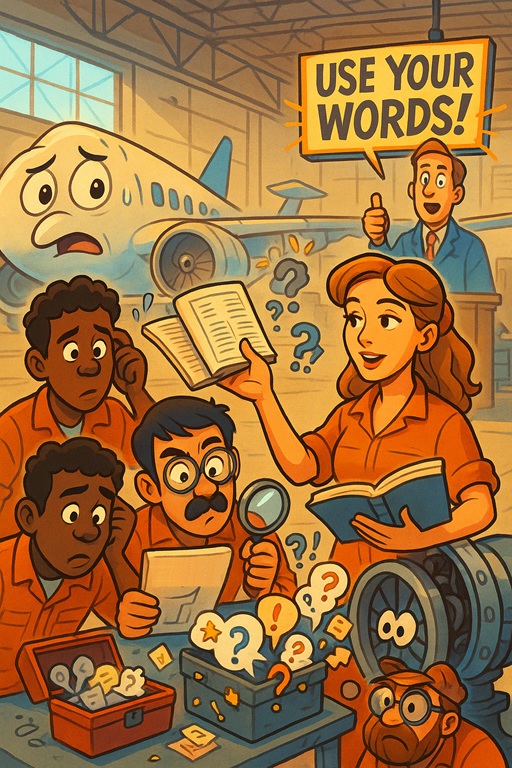
On the hangar floor, every aircraft represents a convergence of intricate systems—and a single misstep can compromise safety. Technicians must frequently convey findings, delegate tasks, and escalate potential hazards. This requires more than basic conversation; it demands active listening, assertiveness without aggression, and the capacity to give and receive feedback constructively. The ability to collaborate, particularly in high-pressure situations, often separates exceptional maintenance teams from merely adequate ones. The reality is stark: even minor breakdowns in communication can result in overlooked issues or misapplied procedures.
Consider a scenario where a senior A&P mechanic mentors a newly certified Aircraft Electronics Technician (AET). The exchange is not just about transferring technical know-how—it is a test of patience, empathy, and the willingness to adapt one’s communication style for maximum clarity. Here, the capacity to articulate complex ideas in plain language becomes a safeguard against error. For those seeking to formalize their credentials or expand their expertise, exploring programs like the AET certification training program can reinforce both technical and communicative competencies.
Conflict Resolution and Problem Solving
Disagreements are inevitable in any collaborative setting. On the hangar floor, however, unresolved disputes can spiral quickly—fueling resentment or, worse, leading to procedural lapses. Technicians with robust soft skills recognize conflict as an opportunity for growth rather than a threat. They navigate disagreements by prioritizing the issue over individual ego, ensuring that operational objectives are met without sacrificing morale.
Moreover, effective communicators often become informal leaders, even without official titles. Their ability to clarify expectations, diffuse tension, and broker consensus contributes to a culture of safety and continuous improvement. The FAA underscores this, noting that environments with strong communicative norms see fewer accidents and more proactive reporting of near-misses.
And sometimes, as if scripted for suspense, a minor oversight—a bolt misplaced, a wire left unsecured—triggers a chain of events demanding swift, collective action. In these moments, it is not the fastest or most technically adept who shine, but those who can marshal the team, communicate clearly, and maintain composure under pressure.
Adaptability in a Changing Industry
The aviation industry is evolving, with new certification requirements, advanced diagnostic tools, and increasingly interdisciplinary teams. As professionals transition—perhaps from military service using their military aircraft maintainer certifications to civilian aviation roles—they must quickly acclimate not just to new protocols but to varied communication expectations. For veterans, resources such as aviation maintenance training for military veterans offer pathways to civilian certification while emphasizing the soft skills necessary for industry reintegration.
To adapt is to thrive, and adaptability, at its core, is a communicative skill. The best technicians do not simply follow orders—they question, clarify, and synthesize information, often while working across cultural and generational divides.
Conclusion
On the hangar floor, soft skills are not a “nice to have”—they are a non-negotiable. Effective communication underpins every facet of aviation maintenance, from technical troubleshooting to safety reporting and conflict resolution. For those pursuing or renewing certifications such as the NCATT AET or A&P license, integrating soft skills development is crucial. As the industry advances, the demand for technicians who can blend technical mastery with interpersonal finesse will only intensify.
In the end, technical knowledge is the ticket in, but communication is what keeps you in the game—and sometimes, what keeps everyone safe. Those who neglect this reality are left wondering where things went wrong. Those who master it? They become the ones others rely on when the pressure mounts, and the stakes are high.