


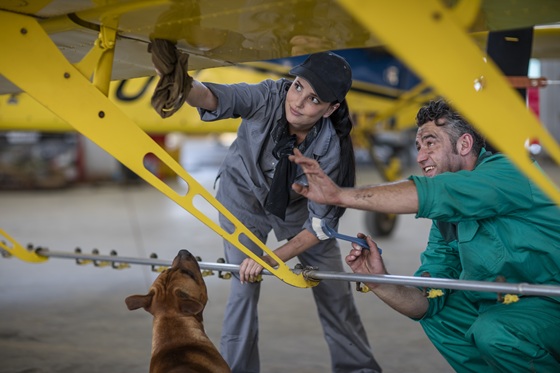
Aviation maintenance is an industry defined by its unforgiving margins for error. Safety culture, in this context, is not a set of policies but an ecosystem—one that is only as robust as the daily actions, decisions, and vigilance of every technician and manager involved. The pursuit of zero-error maintenance requires more than technical competence; it demands a deep-rooted commitment to continuous improvement, learning, and accountability. Your role as an aviation maintenance professional, whether you are pursuing an Aircraft Electronics Technician (AET) certification, an FCC General Radiotelephone Operator License (GROL), or an FAA Airframe & Powerplant (A&P) license, is central to this mission.
Defining Safety Culture in Aviation Maintenance
Safety culture can be defined as the shared values, beliefs, and practices regarding safety within an organization. It is reflected in how procedures are followed, how risks are communicated, and how errors are addressed. In aviation, a mature safety culture permeates every layer—from frontline Aircraft Maintenance Technicians (AMTs) to upper management—fostering an environment where individuals feel empowered to report hazards without fear of reprisal. Empirical research underscores that organizations with strong safety cultures experience lower rates of incidents, fewer maintenance errors, and improved overall operational outcomes.
This culture is not static. It evolves with new technologies, regulatory changes, and workforce transitions, such as the influx of military veterans seeking civilian aviation maintenance careers. The link between safety culture and certifications—such as AET, GROL, or A&P—cannot be overstated. Each certification process not only verifies technical knowledge but also instills a foundation for safe work habits and decision-making frameworks.
The Human Element: Error and Accountability
Zero-error maintenance, while aspirational, is predicated on understanding the inevitability of human error. Humans are fallible, even under the best circumstances. However, research suggests that organizational structures emphasizing accountability, learning, and psychological safety significantly reduce the frequency and impact of mistakes. Maintenance errors, often rooted in lapses of attention, incomplete communication, or fatigue, can be mitigated by adherence to rigorous protocols, routine cross-checks, and ongoing training.
The weight of responsibility can feel palpable. Imagine a scenario where a single overlooked wire leads to catastrophic consequences—this is not an abstract risk, but a daily reality. In these moments, the difference between disaster and safety often comes down to the vigilance of one technician, the double-check of a colleague, or the willingness of a junior AMT to speak up.
Role of Certification and Training
Certifications such as AET, GROL, and A&P serve as more than mere credentials; they are critical mechanisms for embedding safety culture into daily practice. Structured training programs and exam preparation courses require individuals to internalize not only technical information but also safety protocols and best practices.
Continued professional development—such as enrolling in aviation maintenance technician training or foreign object elimination (FOE) endorsement—demonstrates a commitment to maintaining and elevating safety standards. These structured learning opportunities foster not only technical excellence but also reinforce a culture of meticulousness, discipline, and integrity.
Methodologies for Cultivating a Safety Culture
The most effective strategies for cultivating safety culture include robust training regimes, implementation of standardized procedures, and active incident reporting systems. Critical analysis of recent literature indicates that simulation-based learning, peer-to-peer mentoring, and just-in-time training modules are particularly effective in bridging the gap between theory and practice. These methodologies emphasize experiential learning, which allows for the safe exploration of failure modes and recovery strategies.
Yet, methodological limitations exist. Overly rigid procedural adherence can, paradoxically, stifle adaptability in dynamic or emergent situations. Thus, a balanced approach is necessary—one that encourages compliance while also valuing professional judgment and open dialogue. In practical terms, the cultivation of a strong safety culture is an ongoing process requiring periodic review, feedback mechanisms, and leadership support.
Analysis and Critical Perspective
Despite advances in technology and training, safety culture remains fragile. It can be undermined by complacency, hierarchical barriers, or insufficient investment in professional development. Comparing organizations with robust safety reporting systems to those without, the contrast is striking—lower incident rates, higher job satisfaction, and increased operational resilience. However, the literature also reveals gaps, particularly in the transfer of safety culture principles during workforce transitions, such as when veterans move into civilian roles.
Occasionally, organizations tout safety as a core value, yet their day-to-day practices betray a gap between rhetoric and reality. Real progress emerges not from slogans, but from concrete investments in training, robust reporting systems, and the daily actions of dedicated professionals. The responsibility is personal, unrelenting, and, at times, isolating—a reminder that vigilance is not optional, but existential.
Conclusion
In aviation maintenance, safety culture is both shield and sword. It guards against preventable error and empowers every technician to act with confidence, clarity, and conscience. The pursuit of zero-error maintenance is not a quest for perfection, but for relentless improvement. Your role, whether as a newly certified technician or a seasoned AMT, is indispensable. Through ongoing education, certification, and personal accountability, you help weave the fabric of a safety culture that protects lives and advances the profession. The task is not easy, nor is it ever truly finished—but it is, without doubt, necessary.