


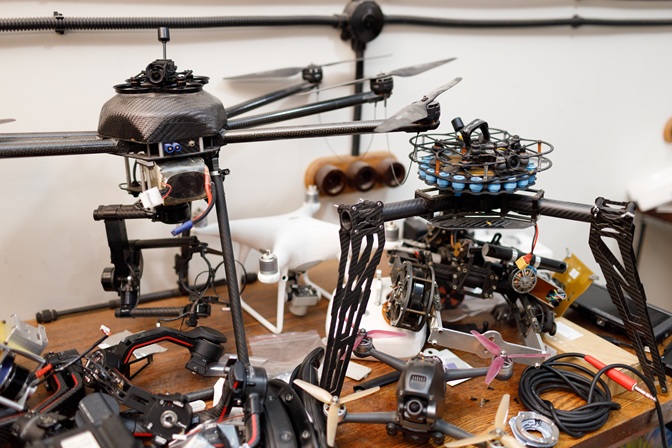
Have you ever wondered how the rapid growth of drone technology is reshaping the aviation industry—and what this means for the people who keep our aircraft safe? The landscape of aviation maintenance is evolving at a remarkable pace, challenging long-standing traditions and raising urgent questions for both current and aspiring aviation maintenance technicians.
The Drone Revolution: New Tools, New Opportunities
Unmanned aerial vehicles (UAVs), commonly known as drones, have swiftly moved from novelty to necessity across aviation sectors. Commercial airlines, cargo carriers, and even agricultural services are leveraging drones for tasks ranging from inspections to deliveries. For technicians, this shift introduces new responsibilities: understanding drone-specific systems, sensors, and maintenance procedures.
The skill set required for today’s aviation maintenance technician is no longer limited to airframes and engines. Proficiency in avionics, communications, and digital systems—especially those found in drones—is increasingly vital. In this environment, an Aircraft Electronics Technician (AET) certification provides foundational knowledge for both traditional aircraft and emerging drone technologies. As a Reddit user commented in a drone technician thread: “The day I calibrated my first LIDAR sensor on a drone, I realized this is a whole new world of aviation maintenance.”
Changing the Game: What Technicians Need to Know
Drones have accelerated the convergence of aviation, electronics, and information technology. This means aviation maintenance technicians (AMTs) must adapt, learning to diagnose sophisticated flight control systems, software-driven diagnostics, and wireless communications. In effect, the job is not just about tightening bolts or changing oil—it’s about decoding systems that never leave the ground yet have complex electronic signatures. The ability to choose the right aviation maintenance training now involves consideration of drone-related curriculum.
In many ways, the shift mirrors the rapid technological revolutions that have swept through other industries. For some, the pace is exhilarating; for others, it’s a jolt—a reminder that complacency is not an option. Like a seasoned detective noticing a critical detail, today’s technician must be alert to nuances in drone performance, constantly seeking answers in a world where yesterday’s solutions may be obsolete by tomorrow.
There’s an urgency here, an almost palpable energy: the technician’s role is being rewritten in real time. A moment’s hesitation, and you might miss the opportunity to shape the future of flight maintenance.
Certification and Career Pathways in the Drone Era
With change comes opportunity—and the right credentials can open new doors. Earning certifications such as the FCC General Radiotelephone Operator License (GROL) or the FAA Airframe & Powerplant (A&P) certification is more valuable than ever. These qualifications signal to employers that you possess not just foundational skills, but the adaptability and technical fluency required in the age of drones.
If you are a military veteran, or considering transitioning from military to civilian aviation careers, programs are evolving to incorporate drone technologies and relevant certifications. There are veteran-friendly aviation schools and aviation maintenance jobs specifically attuned to this dynamic environment. The question is no longer “Will drones change aviation maintenance?”—it’s “How quickly can you adapt and thrive?”
There’s a realism here, almost a bluntness, that deserves attention: Some see the rise of drones as a threat, fearing automation or obsolescence. Yet, those who lean into training and certification find themselves at the vanguard of an expanding job market—one that values hands-on technical skill blended with digital literacy.
Preparing for the Future: Embrace, Adapt, Succeed
The path forward for aviation maintenance technicians is clear: embrace lifelong learning, pursue relevant certifications, and remain flexible in the face of technological shifts. The tools of yesterday remain important, but the toolbox must grow. Whether you are considering an AET certification, exploring a GROL license, or seeking to understand the intricacies of drone diagnostics, the time to act is now.
Will you be the one to lead, or will you watch from the sidelines as the drone era defines the future of aviation maintenance? In an industry where precision, vigilance, and adaptability are paramount, the choice—and the opportunity—belongs to you.